
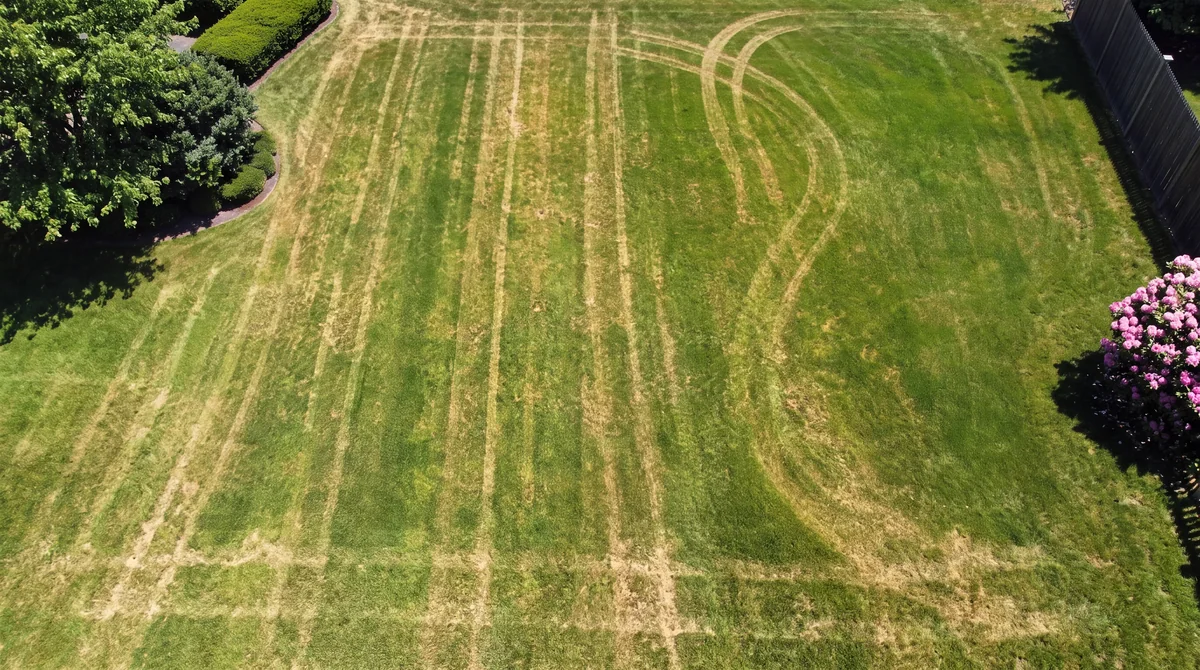
Brown Tire Tracks in Hot, Dry Weather?
Those lines are usually heat tracking, a temporary stress response that appears when traffic crosses grass already strained by heat and low moisture.
The quick answer
The pattern follows the tires. The cause starts with drought stress.
Heat tracking happens when ride-on application equipment or other traffic passes over turf that is already close to wilting. The stressed blades can no longer spring back normally, so pressure bruises them and leaves the route visible as pale, yellow, or brown lines.
Because the marks follow an exact tire pattern, they can look like fertilizer burn or a product spill. They are not. The discoloration comes from physical pressure on grass that was already under severe environmental stress.
What starts it
Heat and low soil moisture bring the grass close to wilting.
Why lines appear
Normal traffic presses blades that no longer spring back easily.
What happens next
Most healthy turf recovers as favorable growing conditions return.
Why Central New York lawns show it
Cool-season grass slows down when summer stress climbs.
The Kentucky bluegrass, perennial ryegrass, and fescues common across Central New York grow best during cooler conditions. During extended heat and dry weather, growth slows and the lawn may begin protecting itself through dormancy.
A lawn can still look partly green while individual plants are already short on water. That is why heat tracking can appear quickly and why the same property may tolerate traffic in the morning but show tracks later in the day.
Sun exposure, soil type, root depth, irrigation coverage, and reflected heat from pavement all influence where the lawn reaches its wilting point first.
What to expect
Most heat tracking is temporary.
Healthy turf usually recovers as moisture returns and temperatures moderate. Depending on the severity of the stress and the weather that follows, visible improvement may take roughly 10 days to four weeks.
The best response is patience. Avoid adding unnecessary traffic while the grass remains wilted and allow moisture and favorable weather to support recovery.
If a mark does not follow a traffic pattern or remains unchanged after the rest of the lawn has recovered, it may have another cause and is worth evaluating separately.
What these tracks do not mean
- They do not show that product leaked from the equipment.
- They do not mean the lawn needs another treatment.
- They do not usually mean the grass is permanently dead.
Heat tracking FAQs
Why did brown tire tracks appear in my lawn?
During hot, dry weather, grass can reach its wilting point before it looks completely brown. Pressure from application equipment, bicycles, hoses, or foot traffic can bruise the already-stressed blades and make the traffic pattern visible. This is called heat tracking.
Are the tracks fertilizer burn or a chemical spill?
No. Heat tracking follows the path of traffic, but the discoloration comes from physical pressure on drought-stressed grass blades. It is not evidence that fertilizer, weed control, or another product leaked from the tires.
Does heat tracking need another lawn treatment?
No. There is no corrective product that immediately reverses heat tracking. Recovery comes from moisture, cooler temperatures, and renewed grass growth.
Will brown heat tracks recover?
In most cases, yes. Recovery commonly takes roughly 10 days to four weeks depending on the severity of the stress and how quickly rainfall, irrigation, and cooler temperatures return.
Helpful lawn guidance
Related lawn concerns
Still unsure what the pattern is?
Send Emerald a clear photo of the affected area. We can help identify whether the pattern matches heat tracking or deserves a closer look.
Contact Emerald Lawn CareThis guidance reflects turf-science information from Cornell University, Michigan State University Extension, Iowa State University Extension, Colorado State University Extension, and Advanced Turf Solutions.