
Mud Tracks After Wet-Weather Lawn Service?
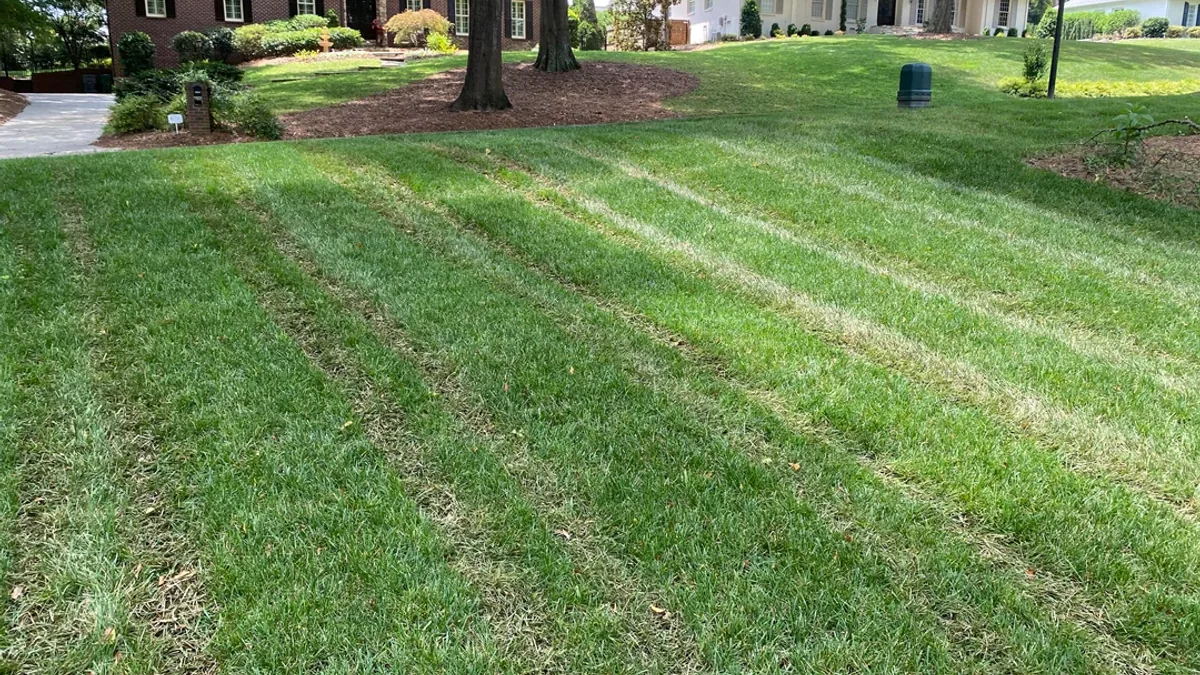
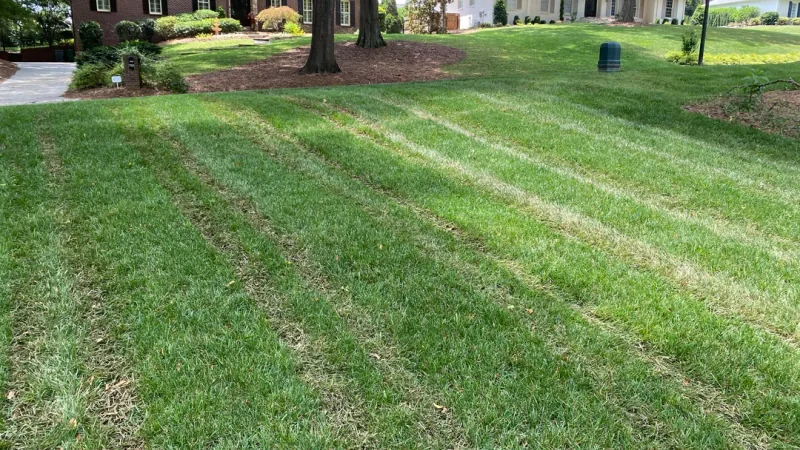
When saturated soil rides up on application-equipment tires and settles on the grass, the marks can look worse than the turf underneath.
The quick answer
Surface mud can look like turf damage even when the lawn underneath is intact.
During soggy or oversaturated conditions, tires on ride-on application equipment can pick up wet soil as they cross the property. Some of that soil may then settle on top of the grass in the same pattern as the tires.
When the ground remains level and the grass has not been torn or displaced, what you are seeing is surface material rather than a lawn that needs repair.
What starts it
Saturated ground allows wet soil to collect on equipment tires.
What you are seeing
A thin layer of soil resting on top of otherwise intact grass.
What happens next
The visible material clears naturally as conditions dry and growth continues.
Why it happens here
Central New York regularly moves between saturated and firm soil conditions.
Heavy rain, spring snowmelt, shaded areas, and slow-draining soil can leave parts of a property wetter than the rest. Conditions can also vary within the same lawn, especially around low spots and areas that receive runoff.
Application equipment is designed to distribute lawn products evenly across the property. When soil is saturated, however, the tire tread can temporarily carry wet soil onto the grass as the equipment moves from one area to another.
The resulting lines are often much more visible than the small amount of soil involved, which is why the lawn can appear disturbed at first glance.
A useful distinction
This guidance is for mud on top of level turf.
Surface mud tracks
- The lawn remains at its normal level.
- Grass blades remain present beneath the discoloration.
- The visible soil sits on top of the turf.
- No lawn treatment or repair is needed.
A different condition
A noticeable depression, displaced soil, exposed roots, or torn sod is an actual rut rather than the temporary surface condition described here.
If the distinction is unclear, a photo of the full track and a close view of the grass usually makes it easy to identify.
Mud track FAQs
Why are there muddy-looking tire tracks after my lawn service?
When the ground is saturated, tires on ride-on application equipment can pick up wet soil and place a thin layer of it on top of the grass. That surface material follows the tire pattern and can make the lawn look more disturbed than it is.
Do surface mud tracks damage the grass?
When the lawn remains level and the sod is not torn or displaced, the muddy appearance is temporary. The soil is resting on the grass rather than replacing or removing it.
Do I need to repair or treat muddy tire marks?
No special treatment or lawn repair is needed for surface mud tracks. As the soil dries and the lawn moves through normal weather and growth, the visible material naturally breaks down and disappears.
How can I tell surface mud from an actual rut?
Surface mud leaves the lawn at its normal level with intact grass underneath. A rut has a noticeable depression, displaced soil, or torn sod. This page addresses surface mud rather than a true rut.
Helpful lawn guidance
Related lawn concerns
Have a photo you would like us to check?
Send Emerald a clear photo of the affected area. We can confirm whether it matches the temporary surface condition described here.
Contact Emerald Lawn CareThis guidance combines Emerald Lawn Care's experience since 2003 with Cornell University turf-science guidance on saturated soils, surface traffic, and compaction.