
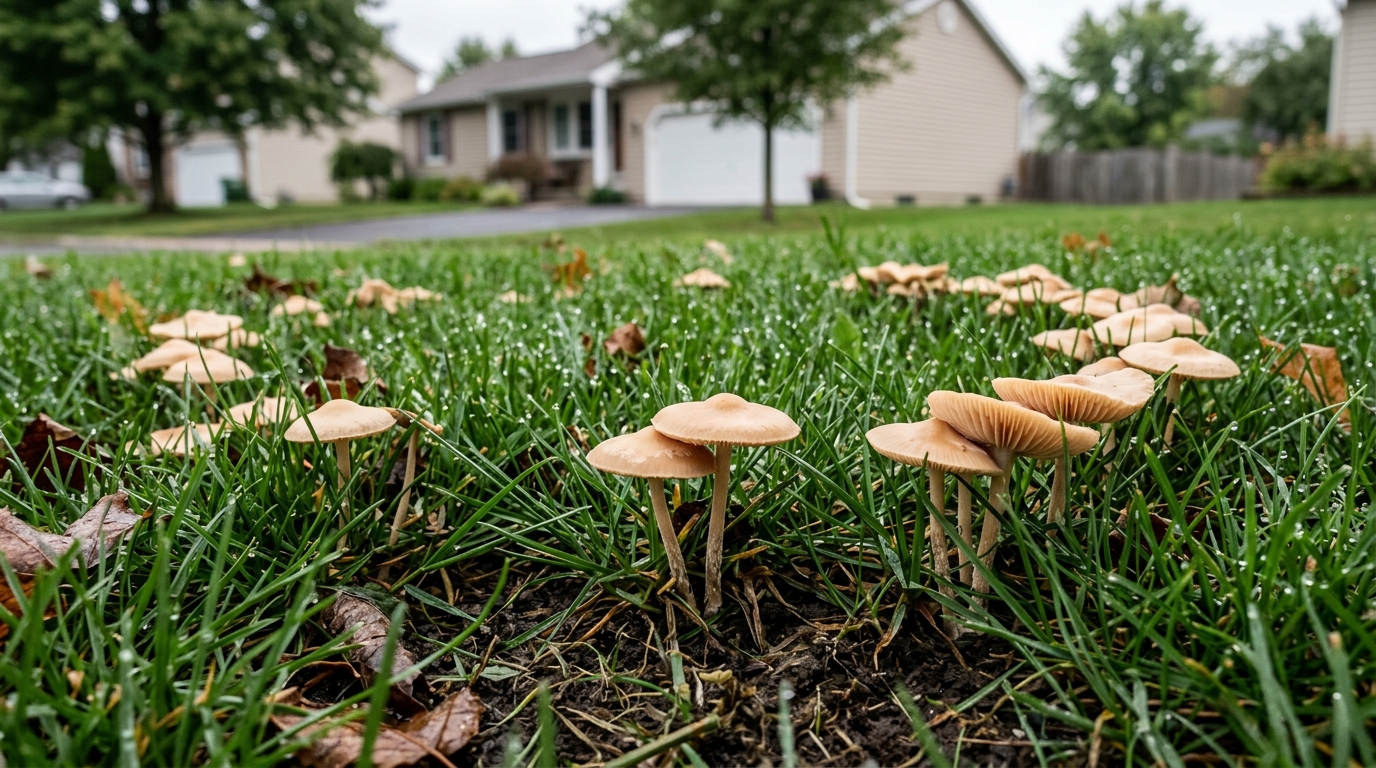
Mushrooms in Your Lawn? Here Is What Is Happening.
Most lawn mushrooms in Central New York are a natural moisture and organic-matter issue. They look strange, but they are rarely something a lawn treatment company can spray away.
Honest lawn guidance
Mushrooms are a sign, not a lawn treatment problem.
When mushrooms pop up in a Syracuse-area lawn, they are usually the visible part of fungi already working in the soil. Those fungi feed on decaying organic material such as old tree roots, buried wood, leaves, thatch, or other plant debris.
The mushrooms above ground are temporary fruiting bodies. They often show up after rainy stretches, humid weather, overwatering, or in shaded spots that stay damp. Once the lawn dries out, they usually fade on their own.
Because the active fungus is underground, ordinary lawn mushrooms are not something a surface treatment can reliably make disappear for good. The most useful approach is to remove the visible mushrooms when needed, manage excess moisture, and improve the lawn conditions that keep triggering them.
Wet weather
Mushrooms often appear after rainy stretches or heavy irrigation because the soil stays moist enough for fungi to fruit.
Decaying roots or wood
Old roots, buried stumps, construction debris, leaves, and thatch can feed the fungi living under the surface.
Shade and slow drying
Areas under trees, near fences, or along damp edges can stay cooler and wetter long after the rest of the lawn dries.
What you can do right now
- Kick or rake mushrooms over if you only want the lawn to look cleaner for the day.
- Pluck them with gloves and dispose of them in a trash bag if children or pets use the area.
- Avoid watering unless the lawn actually needs it, especially during already-wet stretches.
- Rake up leaves, sticks, and excess organic debris so fungi have less material to feed on.
- Improve airflow and sunlight where practical by pruning heavy shade around persistent spots.
- Use core aeration to help compacted, wet soil breathe and drain better over time.
Should you worry about fairy rings?
Sometimes mushrooms show up in a ring or arc. That is commonly called a fairy ring. In many home lawns it is mostly cosmetic, especially when the only symptom is a circle of mushrooms or a darker green ring of grass.
If the ring is paired with dead or drought-stressed turf, the issue may be more about water movement through the soil than the mushrooms themselves. Aeration, careful watering, thatch management, and improving drainage are the first practical steps.
A quick safety note
Do not eat lawn mushrooms unless a qualified mushroom expert has identified them. Some harmless-looking mushrooms can make people or pets sick. If you have children, dogs, or curious pets in the yard, the safest move is to pick the mushrooms with gloves and throw them in a sealed trash bag.
Lawn mushroom FAQs
Why are mushrooms growing in my lawn?
Mushrooms usually appear when fungi in the soil are breaking down organic material like old roots, buried wood, thatch, leaves, or other decaying matter. Wet weather, shade, and damp soil make the visible mushrooms show up quickly.
Can Emerald spray something to get rid of lawn mushrooms?
No. For ordinary lawn mushrooms, there is not a lawn treatment spray that reliably removes the underground fungus. The mushrooms you see are temporary fruiting bodies, so the practical answer is physical removal and improving the conditions that triggered them.
Do mushrooms mean my lawn is diseased?
Usually, no. Most lawn mushrooms are a natural part of the soil ecosystem and are often breaking down organic matter. The exception is when mushrooms are paired with dead turf rings, drainage problems, or tree decay, which may need a closer look.
What should I do if I see mushrooms in my yard?
If you only care about appearance, you can knock them over and let them dry out. If kids or pets use the lawn, pluck them with gloves and throw them in a trash bag. Do not eat mushrooms from the lawn unless they have been identified by a qualified expert.
How can I make mushrooms less likely to come back?
Focus on moisture and organic matter. Avoid overwatering, improve drainage, rake up leaves and sticks, reduce thick thatch, remove buried wood when practical, and consider aeration where soil stays compacted and wet.
Helpful lawn guidance
Related lawn concerns
Where Emerald can help
We do not sell a mushroom spray because that would not be honest. What Emerald can help with is the bigger lawn health picture: thicker turf, better seasonal care, aeration when it fits, and local guidance when something looks unusual.
This guidance reflects university turf-science and cooperative extension research on lawn fungi and fairy rings.